Waves and clipper tracks usually tempt you to make another pass—and then another. But a striped slick job is rarely fixed by running tired blades over the same area repeatedly. The better answer is to stop and identify what changed: blade sharpness, heat, lubrication, wool cleanliness, skin tension, or clipper angle.
A slick shear should feel controlled. The clipper should travel through the wool without being shoved, the comb should stay stable against the lamb, and each pass should blend into the last. When that easy cutting feel disappears, your technique should not become more aggressive. Your first move should be to diagnose the equipment.
Learn What a Sharp Blade Feels Like
The most useful blade test happens at the beginning, when you know the set is sharp. Pay attention to how little effort it takes to move through clean wool. Listen to the motor, feel the clipper in your hand, and notice how evenly the wool clears.
That becomes your baseline.
Blade wear is often gradual. You may not notice one dramatic moment when the set becomes dull. Instead, you begin leaning harder, slowing down, or making shorter passes. The motor may sound loaded, and the clipper may start pushing wool ahead of the comb rather than cutting through it cleanly.
A dirty patch can change performance much faster. Sand and grit hidden in the fleece—especially over areas that collect dirt—can take a blade set from acceptable to poor in a few passes. Wash the lamb early enough that the wool and skin are completely clean and dry before shearing, following the preparation guidance in the Texas A&M AgriLife 4-H guide agrilifeextension.tamu.edu. Never operate corded equipment on a wet lamb or wet wash-rack surface.
If you have to push harder, stop. Something in the cutting system or your setup has changed—check blade sharpness and heat, packed wool, lubrication, tension, skin tension, and clipper angle before continuing.
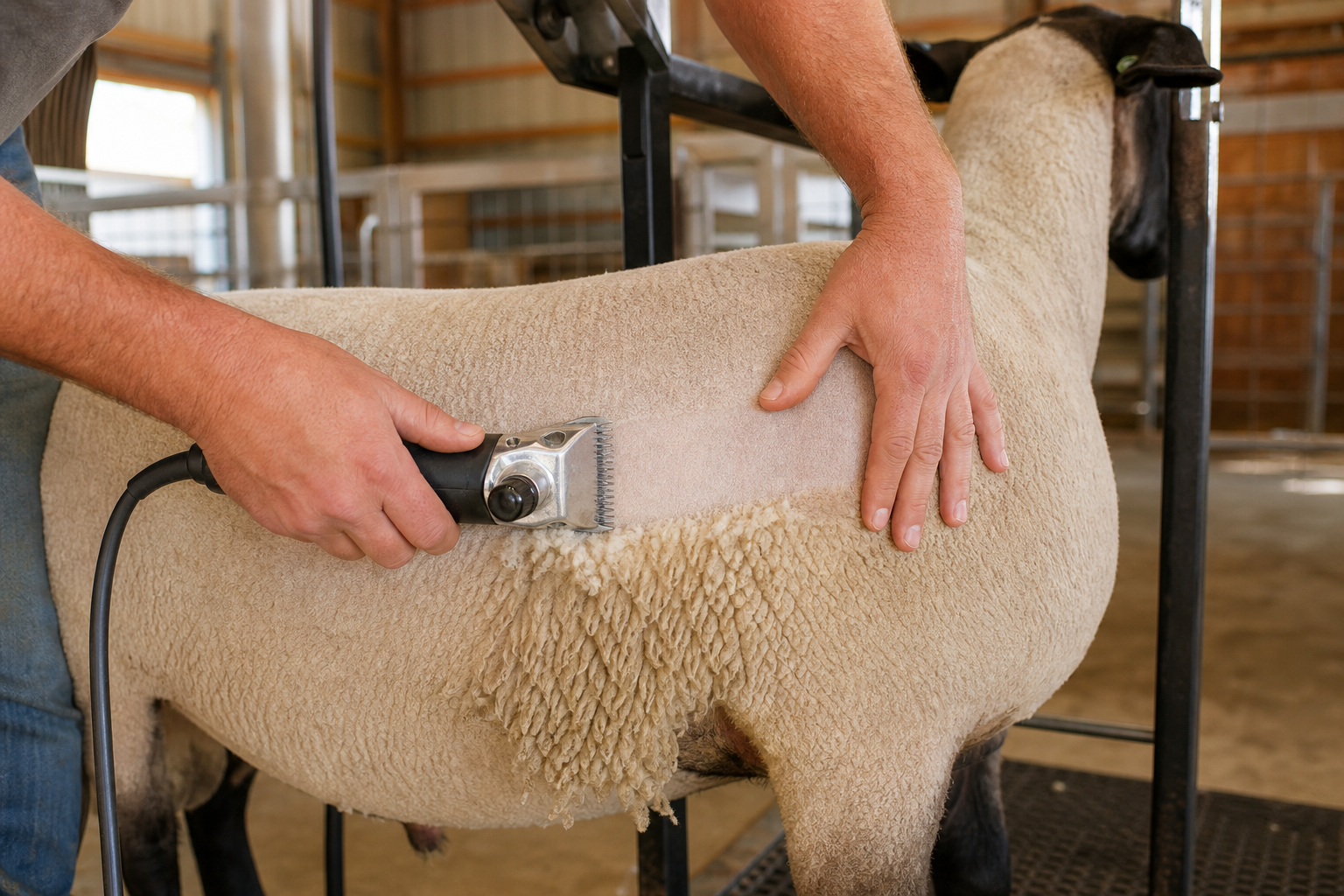
Do not use your forearm as a substitute for sharp steel. More pressure can create scratches, tracks, skin irritation, extra heat, and premature wear on the comb and cutter.
Pressure Is a Warning, Not a Solution
When a blade starts dragging, operators often tighten the clipper tension and keep going. A small tension adjustment may be part of correct setup on some machines, but cranking down tension to rescue a worn blade is a poor trade.
Excess tension creates more friction. More friction creates more heat. It can also cause the cutter to scratch the comb, meaning the sharpener may have to remove additional metal to restore the surface. That shortens the useful life of the blade set.
Follow the clipper manufacturer’s instructions for setting tension. Tension systems differ, so there is no honest universal number of clicks or turns that fits every machine and blade combination.
The operating test is simpler: the cutter should move correctly and the set should cut freely without excessive noise, drag, or heat. If proper tension no longer produces a clean cut, change to a known-sharp set first. If the replacement set also cuts poorly, stop and inspect for packed wool, incorrect installation, improper cutter engagement or alignment, a damaged comb, a worn drive component, or a problem in the clipper head. Follow the manufacturer’s instructions for mechanical adjustments, or refer the clipper to a qualified service technician. Do not keep tightening or swapping blade sets to compensate for a handpiece problem.
This is where having multiple prepared sets matters. A spare sharp set lets you make a calm equipment change instead of gambling the entire fit job on “one more side.”
Heat Changes the Way You Shear
Blade heat is not just uncomfortable for the lamb. It also changes the operator.
As a set gets hot, you may lift the clipper away from the skin, rush difficult areas, alter the angle, or press inconsistently. Those little compensations produce uneven cutting. They can also make the lamb restless, which creates another round of poor contact and extra passes.
Turn the clipper off and allow the moving cutter to stop completely. Then carefully check the stationary exterior of the blade set with the back of a finger. If it is uncomfortably hot, replace it with a cool set. Handle oiling according to the manufacturer’s directions.
A practical cooling system is rotation:
Blade coolant can be useful when it is approved for your equipment and used exactly as labeled. It is not a substitute for oil, and spraying more product does not restore a dull cutting edge. Keep aerosol products away from the lamb’s eyes and from ignition sources, and never spray into a running motor unless the clipper manufacturer specifically directs it.
Oil the Contact Surfaces—Not the Lamb
The comb and cutter slide against each other at high speed. Oil reduces friction at those contact points, helping the set run more smoothly and limiting heat buildup.
Use clipper oil or another lubricant specifically approved by the equipment manufacturer. Place it only at the recommended oiling points. Different clipper heads are built differently, so the manual—not a social-media habit—should determine where the oil goes.
Oil during the job whenever the manufacturer calls for it and whenever a cleaned or changed set goes back into service. After applying oil, briefly run the clipper pointed safely away from the lamb, then wipe away excess. Too much oil can spread onto the fleece, collect dust, and create another source of blade drag.
Oil cannot sharpen a dull blade. If lubrication briefly improves the sound but the clipper still requires pressure, the set needs to be changed or professionally sharpened.
At the end of the job, do not leave blade sets lying in wool, dirt, or on a damp wash-rack surface. Remove loose debris and store them in a protected, lightly lubricated condition following manufacturer guidance. Dirt damages cutting surfaces; moisture invites rust; loose storage allows teeth to be chipped.
Keep the Comb Flat and the Angle Steady
A sharp, cool, oiled blade can still leave tracks if the clipper angle changes through the stroke.
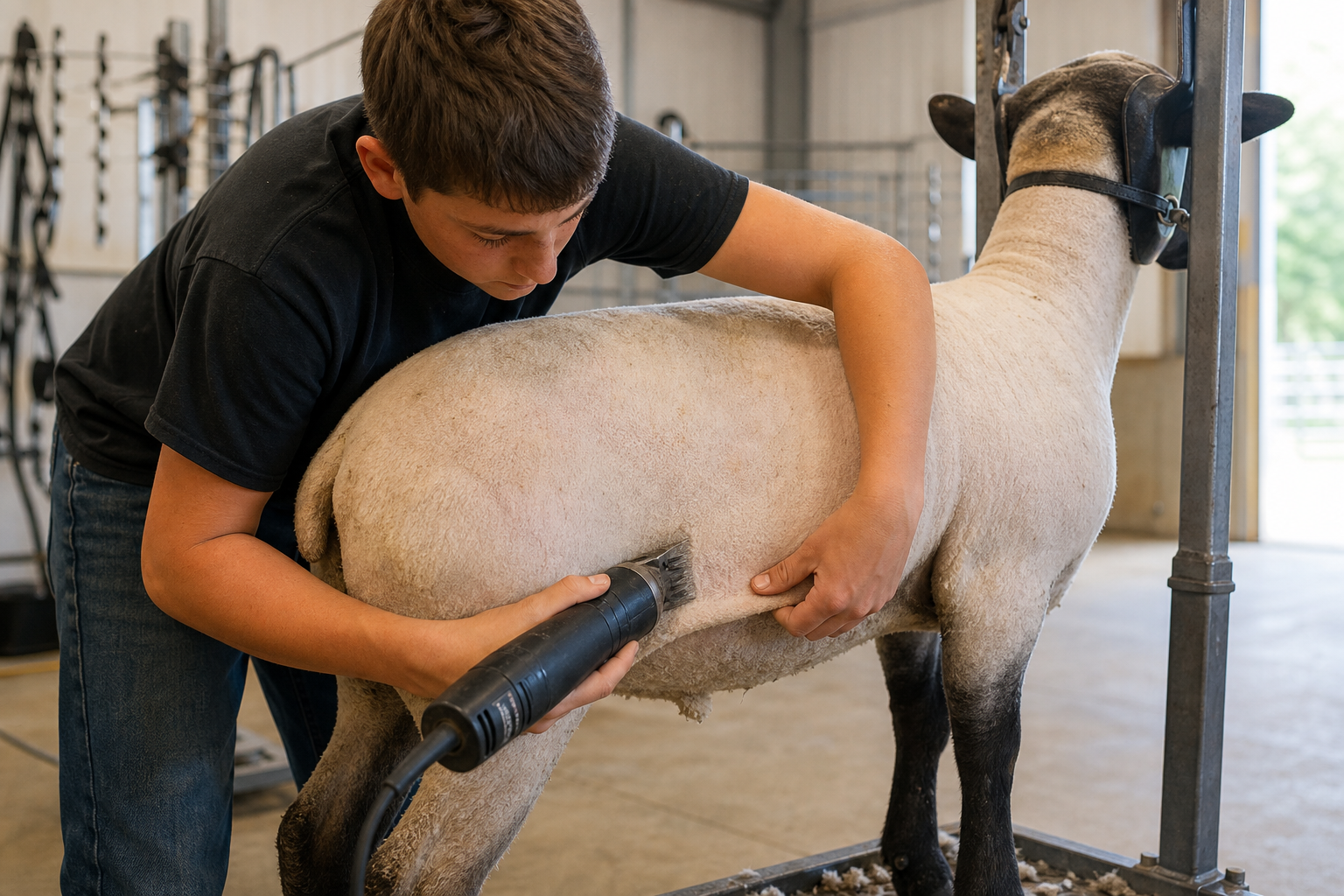
Think of the comb as a small landing surface. You want that surface riding evenly against taut skin, not tipped forward so the teeth dig in and not rolled backward so only part of the blade cuts. Use light contact and let the clipper travel. Your wrist should guide the machine rather than levering it into the lamb.
Pull the skin tight with your free hand, especially around wrinkles, flanks, the shoulder pocket, and transitions into the neck and legs. Tight skin gives the blade a flatter working surface and reduces the chance of catching a fold. Washington State University’s slick-shearing guidance likewise emphasizes stretching the skin for a smoother, safer shear extension.wsu.edu.
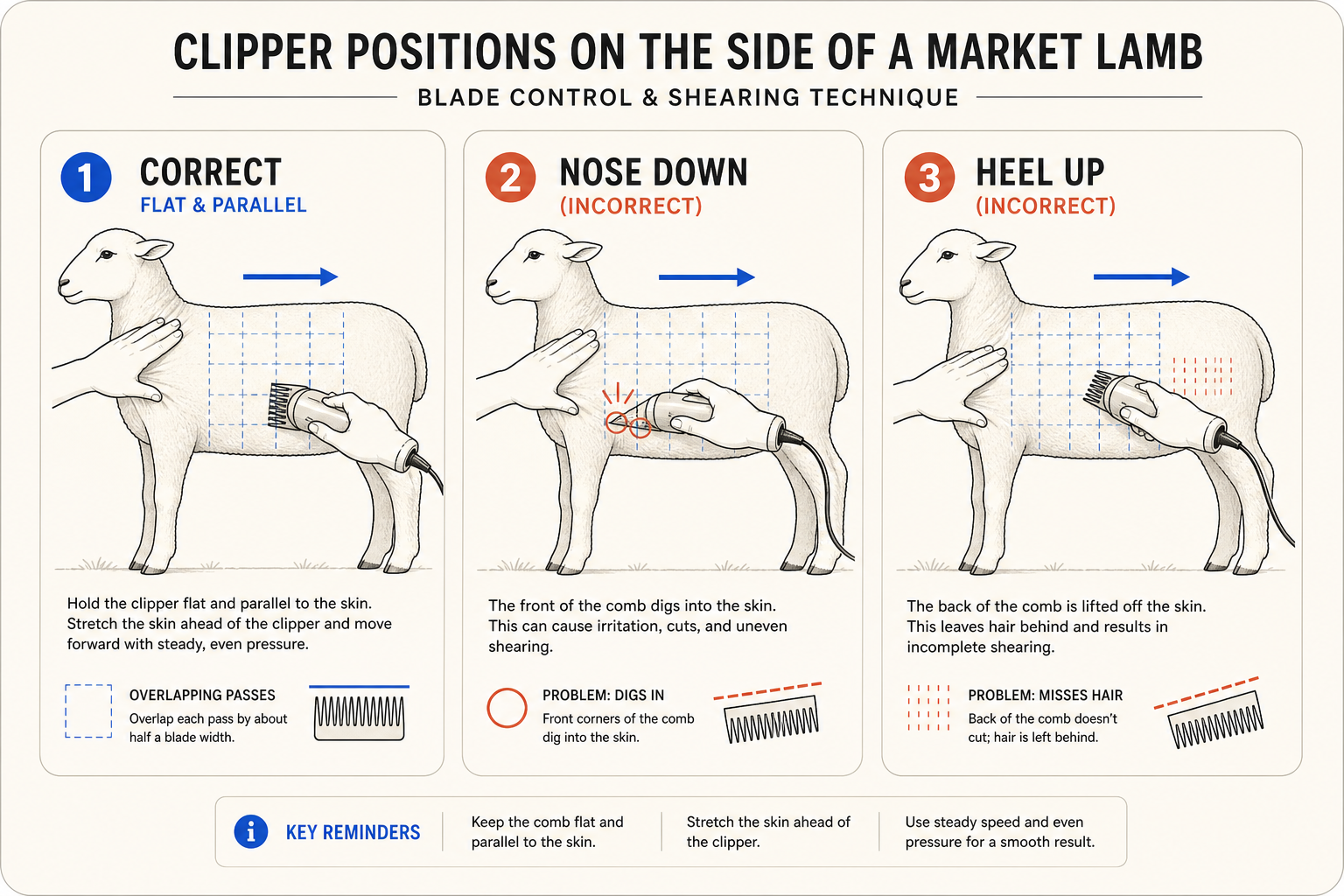
Use controlled strokes that follow the body contour and cut against the wool’s lay. Overlap only enough to avoid leaving narrow strips; use shorter strokes where maintaining flat, even blade contact becomes difficult.
Keep the angle consistent from the start of the pass to the finish. A common mistake is beginning flat, then lifting or rotating the wrist as the arm reaches forward. Reposition your feet and body instead of stretching beyond comfortable control.
Separate Blade Tracks From Body Contours
Not every uneven-looking area is caused by the blade. A lamb’s skin wrinkles, muscle transitions, and natural hollows can change how light reflects across a fresh slick shear. Before chasing a shadow, reset the lamb in a square show position, stretch the skin, and look from more than one angle.
True blade tracks generally follow your stroke pattern. They appear as repeated lines, narrow strips, or patches where the clipper stopped cutting evenly. If every line runs in the same direction as your passes, inspect your overlap and angle. If the entire surface begins looking rough at once, suspect heat, dullness, contamination, lubrication, or a mechanical problem.
Do not try to erase tracks with fast, random cross-passes. First correct the cause. Then determine whether the line is a raised strip left by inadequate overlap or a low groove already cut shorter than the surrounding wool. A raised strip can be removed with one deliberate blending pass using a cool, sharp set, taut skin, and stable clipper contact. If the line is a low groove, stop chasing it. A cleanup pass cannot restore the wool; it can only cut the surrounding area equally low or repeatedly scrape exposed skin, increasing irritation and nick risk. Let the groove grow out, or accept it rather than continuing to pass over bare skin.
Use a Stop-and-Reset Routine
When waves appear, stop before frustration takes over.
Turn off the clipper and allow the moving cutter to stop completely. Check the stationary exterior of the blade set for heat. Look for packed wool, dirt, or residue. Confirm lubrication, installation, cutter engagement and alignment, and proper tension. If the cutting feel is not restored immediately, install a known-sharp set. If that set also cuts poorly, stop and inspect the blade drive and clipper head according to the manufacturer’s instructions, or have a qualified service technician inspect the equipment. Once the cause is corrected, square the lamb, tighten the skin, flatten the comb, and restart with one smooth pass.
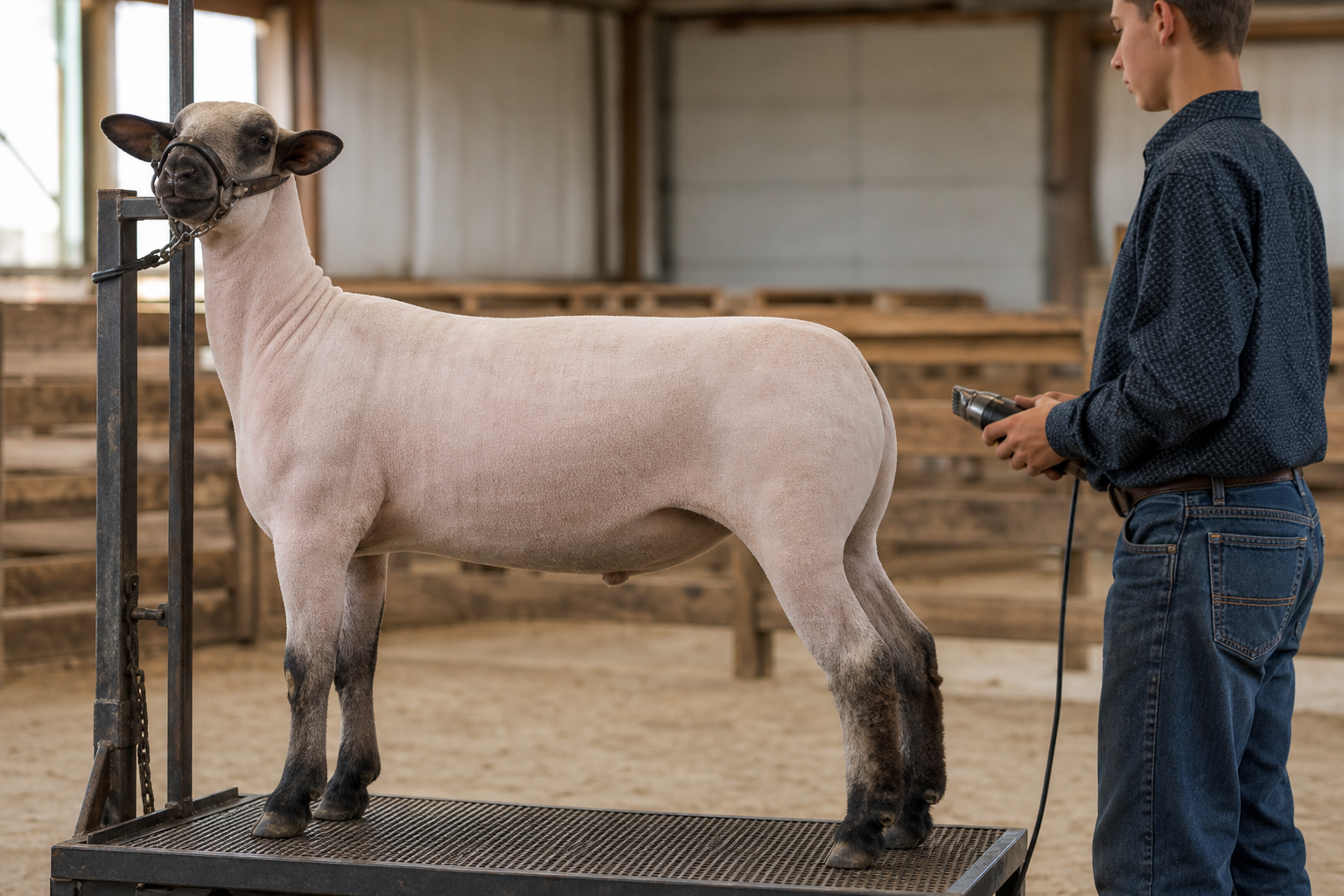
Equipment management cannot replace practice. What good blade condition, taut skin, a steady angle, and consistent passes can do is reveal the lamb cleanly and uniformly without distracting tracks, unnecessary irritation, or avoidable nicks.
That is the goal: not forcing the clipper to finish, but keeping the entire cutting system working well enough that force is never needed.
- Learn the easy cutting feel of a sharp blade; if added pressure becomes necessary, stop and check the cutting system and your setup.
- Control heat by stopping early, checking often, and rotating to a cool, prepared blade set.
- Lubricate according to the clipper manufacturer; oil reduces friction but cannot sharpen a dull edge.
- Remove raised strips with one careful blending pass, but stop chasing low grooves already cut shorter than the surrounding wool.