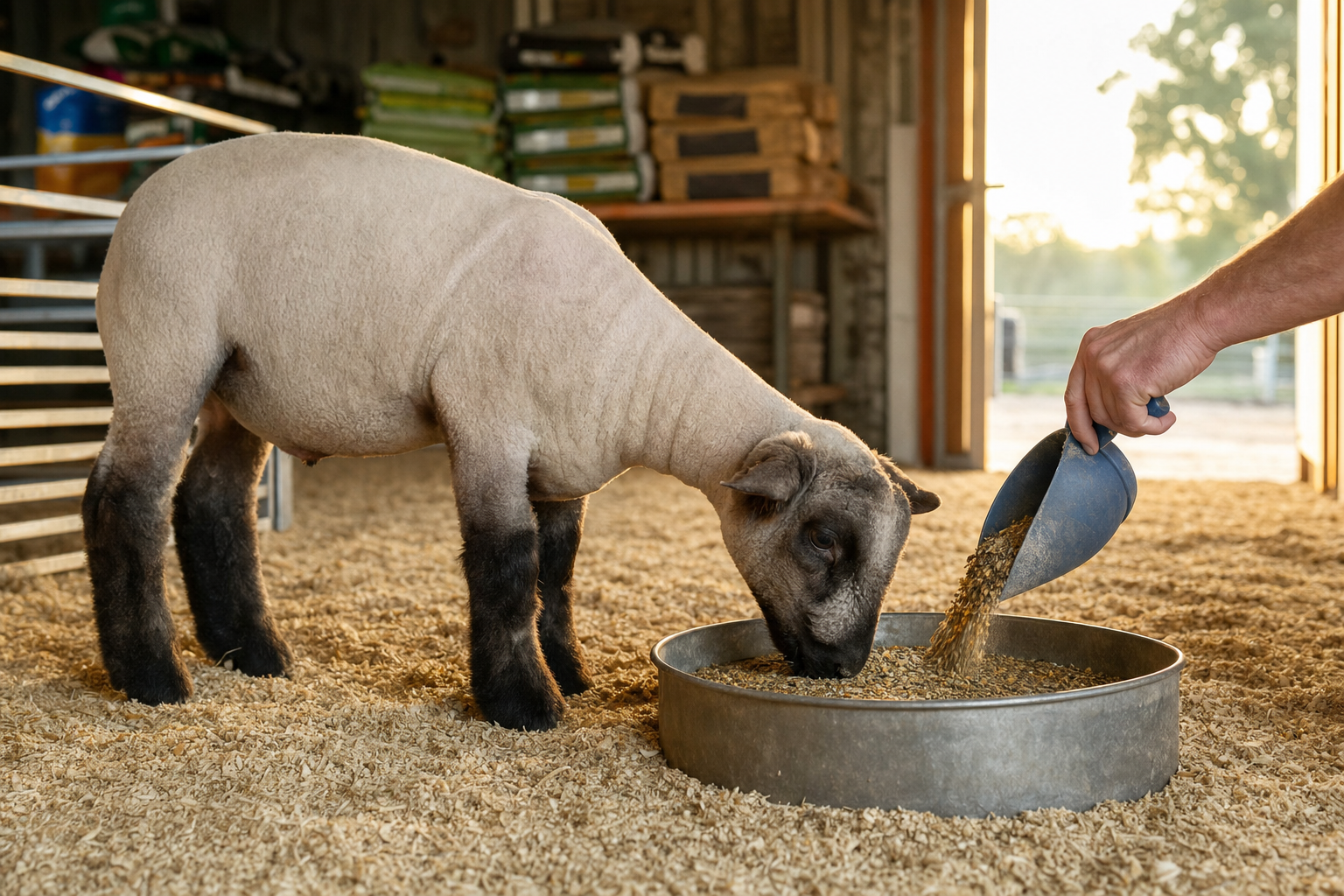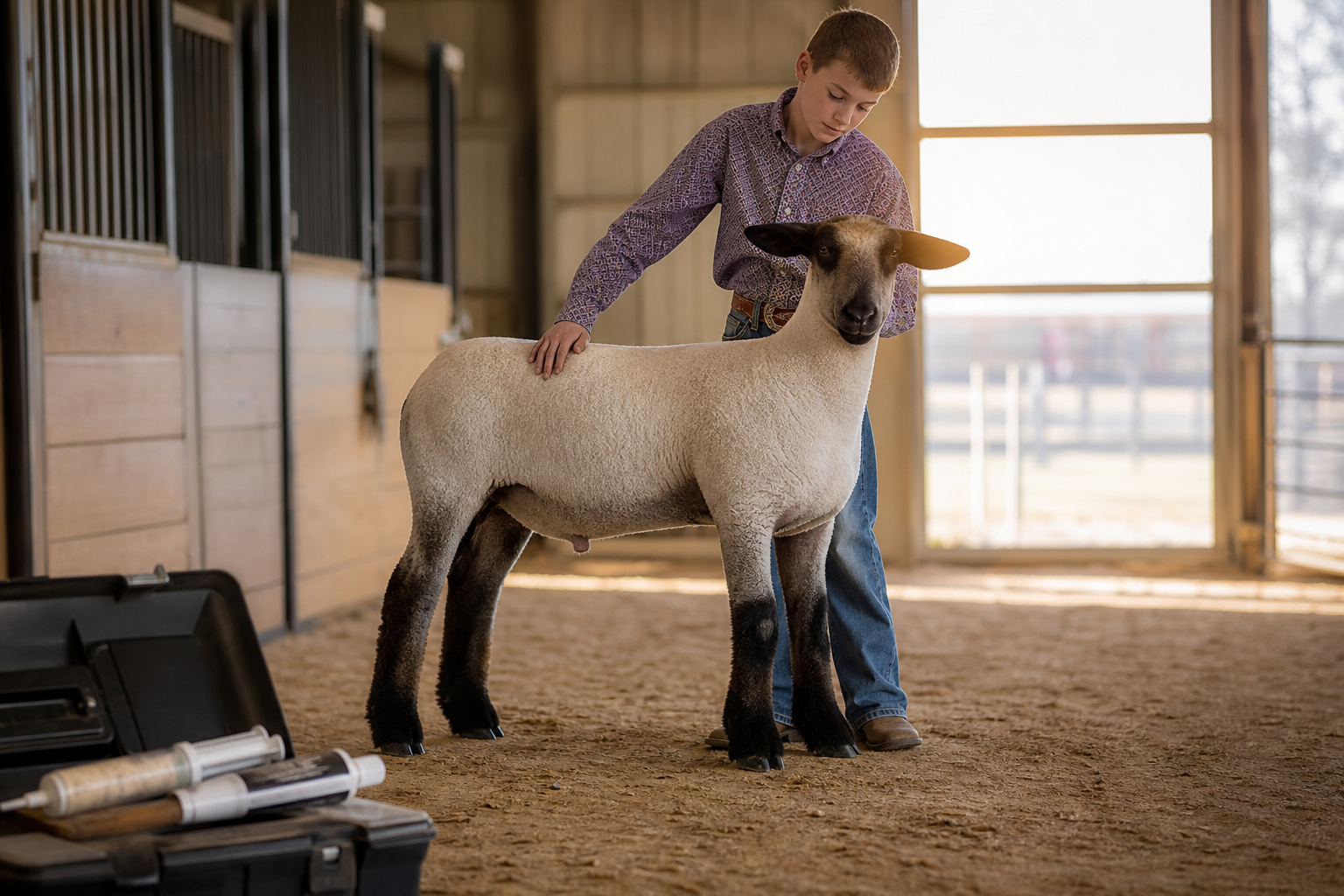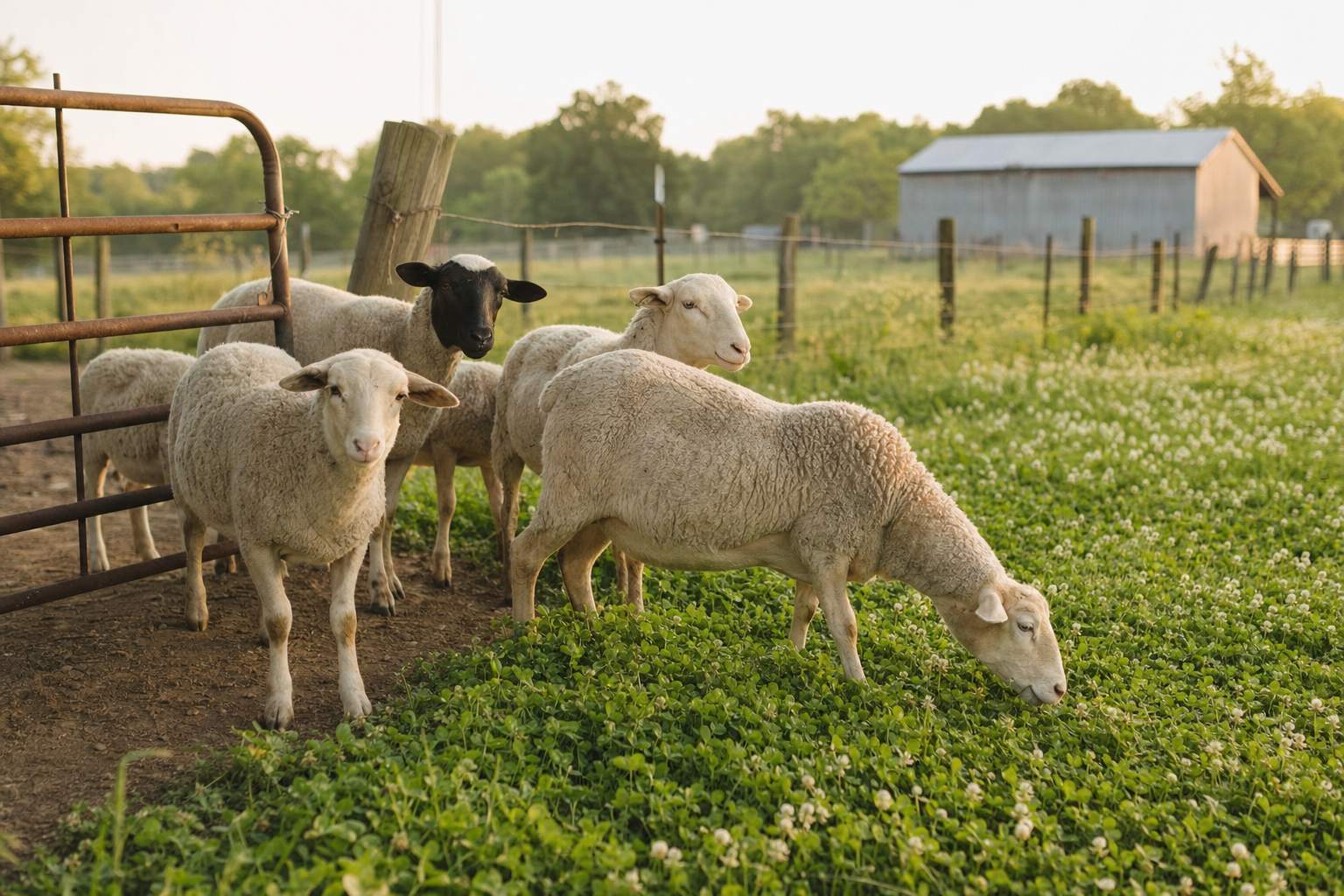
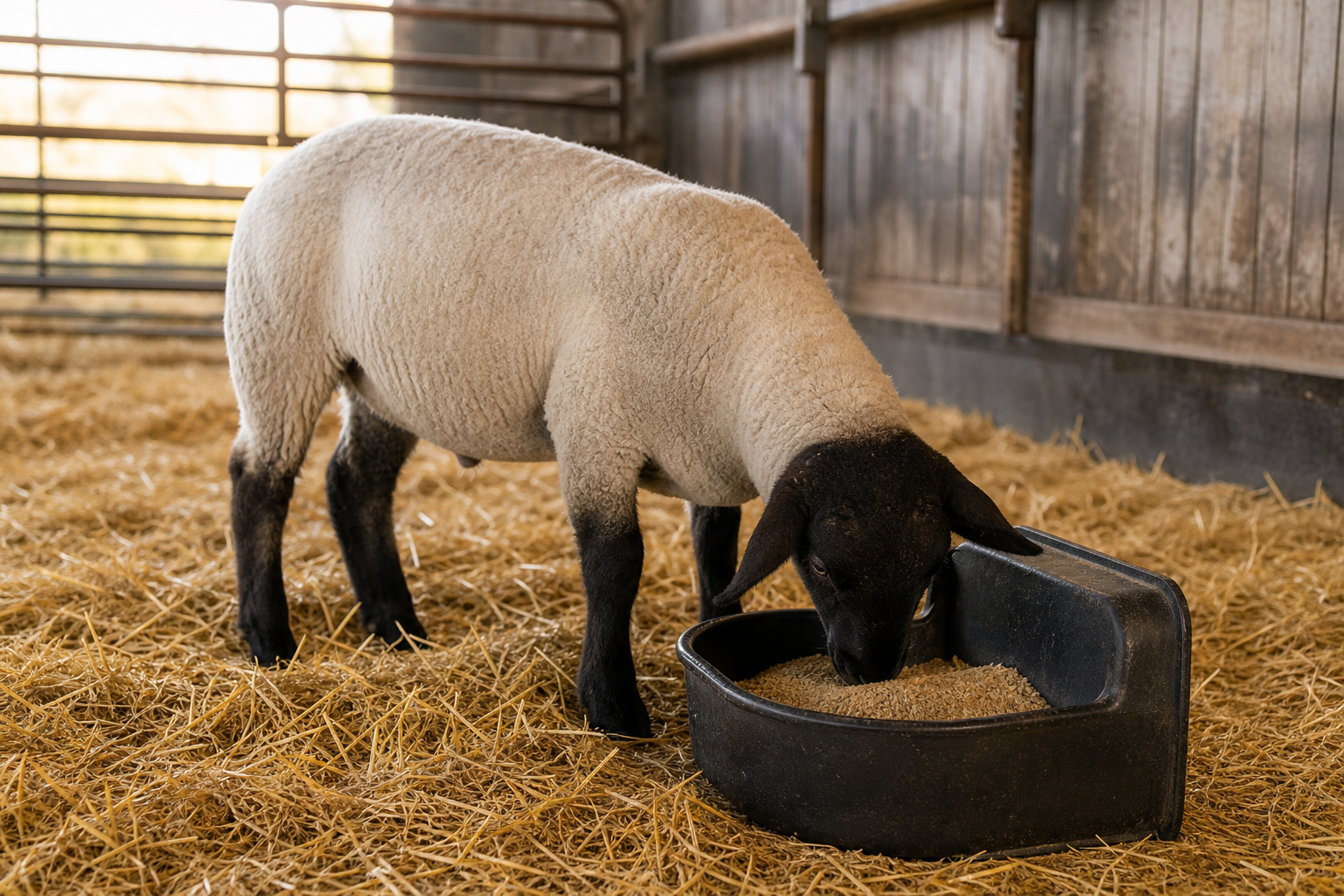
The loose mineral question comes up constantly, and it deserves a better answer than "whatever's on sale at the feed store." Mineral is one of the cheapest things you feed, and one of the easiest to get wrong. Get it right and you support hide, hair, appetite, fertility, and overall thrift — that bright, healthy look you notice when it's missing. Get it wrong and, in sheep, the consequences range from a dull lamb to a dead one. Here's how to pick a product, feed it correctly, and store it so it actually works.
Rule One: Sheep-Specific or Nothing
Sheep are not small cattle, and they are definitely not goats with wool. Their copper tolerance is dramatically lower — copper accumulates in the liver and can cause fatal toxicity, often with little warning. This is the one non-negotiable in mineral selection.
Match the Mineral to the Animal's Job
A show lamb and a bred ewe do not need the same product, even though both need "mineral."
For show lambs, you want a daily base mineral that covers calcium, phosphorus, salt, and the trace minerals that support skin, wool, and condition through the feeding period. Ante Up Show Lamb Mineral is a solid daily option built for exactly that job, with a label rate of 0.5 to 1 oz per head per day. If you're running wethers on a high-concentrate ration, urinary health matters too — a managed calcium-to-phosphorus ratio and plenty of water intake help prevent urinary calculi, and a quality daily base supports that picture.
For a breeding flock, look toward a breeding-specific formula that leans into fertility and conception support. DuraFerm Sheep Concept•Aid is a sheep-safe breeding mineral with organic trace minerals, with label rates scaled by body weight — 0.5 oz daily for sheep 20–85 lbs, up to 1.5 oz for sheep over 150 lbs. Breeders who keep ewes on a sound mineral program report ewes that cycle, settle, and lamb better. That's not magic; it's micronutrition doing its job.
Read the Tag, Then Follow It
The guaranteed analysis tells you what you're actually buying. A few things to check:
- Salt percentage. Salt is the intake regulator in loose mineral, but some products push 25–40% salt — meaning you're paying mineral prices for mostly salt.
- The calcium-to-phosphorus ratio, which should land around 2 in the overall ration.
- Selenium, which is frequently low in regional forages, and zinc, which supports skin, feet, and reproductive performance.
- The feeding rate. This is the label rate, and the actual dose still depends on the animal's weight and the package in front of you — read your label and feed to it.
One practical check: track what disappears from the feeder. If the label says 1 ounce per head per day, a 50-pound bag should last 10 lambs about 80 days. If the mineral vanishes in two, don't just keep refilling. Sheep often hammer new mineral hard for the first week or two, then settle to the recommended rate. Conversely, some sheep simply won't visit the feeder consistently, so loose mineral complements, but doesn't replace, a balanced ration.
Loose Beats Block — and Fresh Beats Loose-But-Crusted
Loose mineral consistently gets better consumption than blocks. Intake from hard blocks is unreliable and usually falls short of target consumption; loose mixes get eaten at more predictable rates. Keep it in a covered feeder, protected from rain and humidity, and only put out a few days' worth at a time. Mineral that gets wet cakes up, the vitamins degrade, and sheep walk away from it. Fresh, dry, and out of the weather — that's the standard.
Mineral is the last place to cut corners. Poor mineral status shows up as poor feed efficiency, more illness, and lambs that just don't look thrifty.
What Mineral Won't Do
Honesty matters here. Mineral supports health, thrift, and fertility — it does not build muscle, add cover, or fix a ration that's wrong. If your feed program is unbalanced, mineral won't rescue it, and piling on extra mineral past label rates gives you minimal benefit for real money. Think of loose mineral as the foundation under a good ration, not a substitute for one.
- Only feed mineral that says sheep on the label — copper in cattle or goat mineral can be fatal.
- Match the product to the job: daily base mineral for show lambs, breeding formula for the flock.
- Feed the label rate, track disappearance from the feeder, and expect heavy early consumption that levels off.
- Keep it loose, dry, fresh, and in a covered feeder — block intake is unreliable, and wet mineral doesn't get eaten.