Everybody wants the same thing when grass comes on: get the sheep off the hay bill and onto the field. And when a flock has been standing in a dry lot on hay and grain, the temptation is to open the gate, let them have at it, and sort the ration out later. That exact sequence — hungry sheep, lush new forage, everything changing on the same morning — is how people buy themselves a bloat or scours wreck.
Turnout done right is honestly boring. But before you can build a schedule, you have to know what's actually growing out there, because tall mature grass and knee-deep clover are two very different meals for a rumen.
Why the Forage Itself Changes the Risk
Bloat is a simple math problem gone wrong. A sheep's rumen ferments forage and produces gas all day long, and a healthy sheep belches that gas away about as fast as it's made. Trouble starts when gas is produced faster than it can escape — or when it physically can't escape at all.
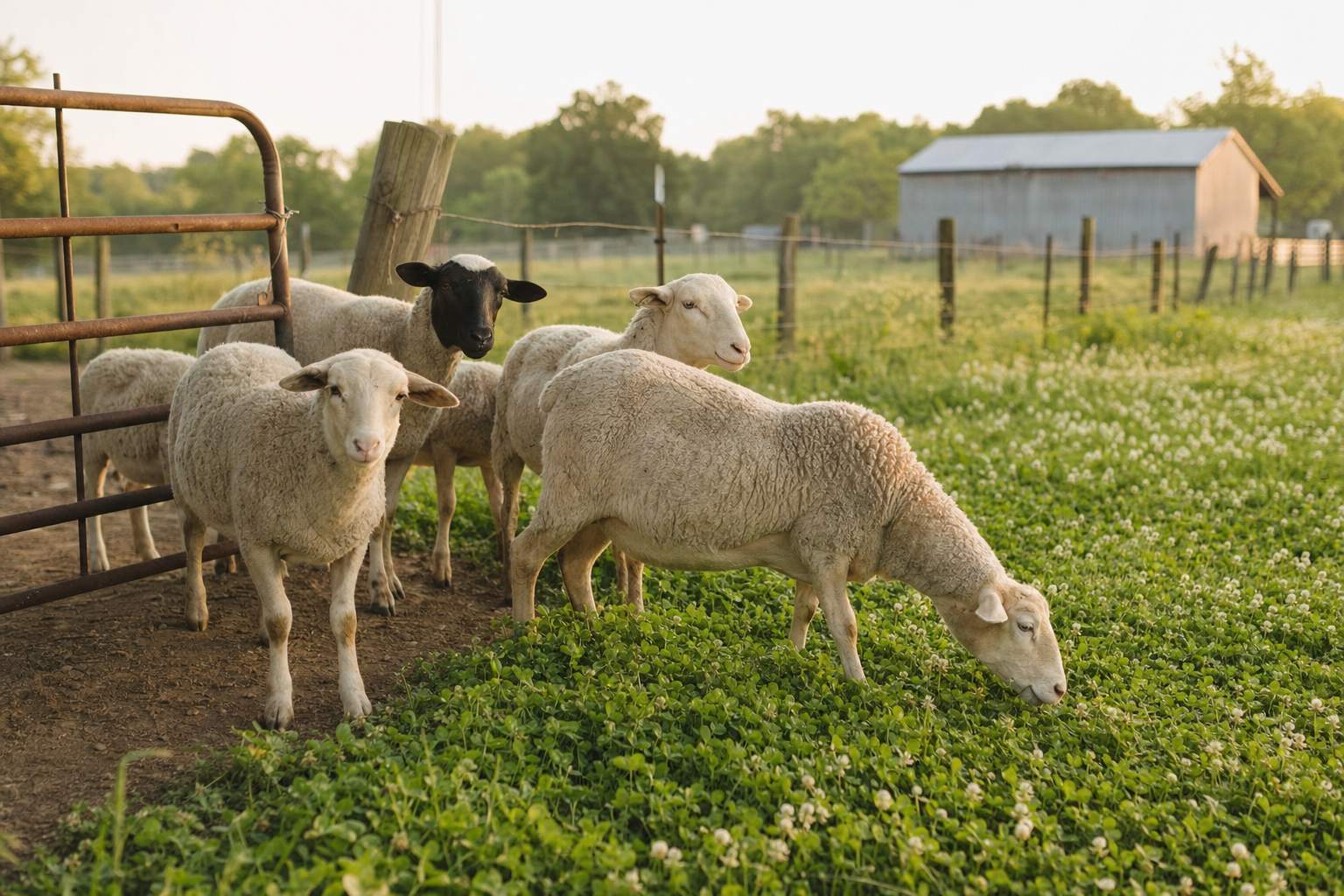
Pasture bloat is usually the second kind: frothy bloat. Lush, rapidly growing legumes — alfalfa and the clovers — are extremely digestible. They ferment fast, and their soluble proteins help stabilize a foam that traps gas in thousands of tiny bubbles the sheep can't belch out. The rumen inflates like a balloon, and there's no easy vent.
Tall, mature grass sits at the opposite end of the spectrum. More fiber, slower fermentation, and — just as important — more chewing. Every extra chew pumps saliva into the rumen, and saliva is nature's own buffer and antifoam. A sheep working on stemmy grass is quietly dosing itself all day.
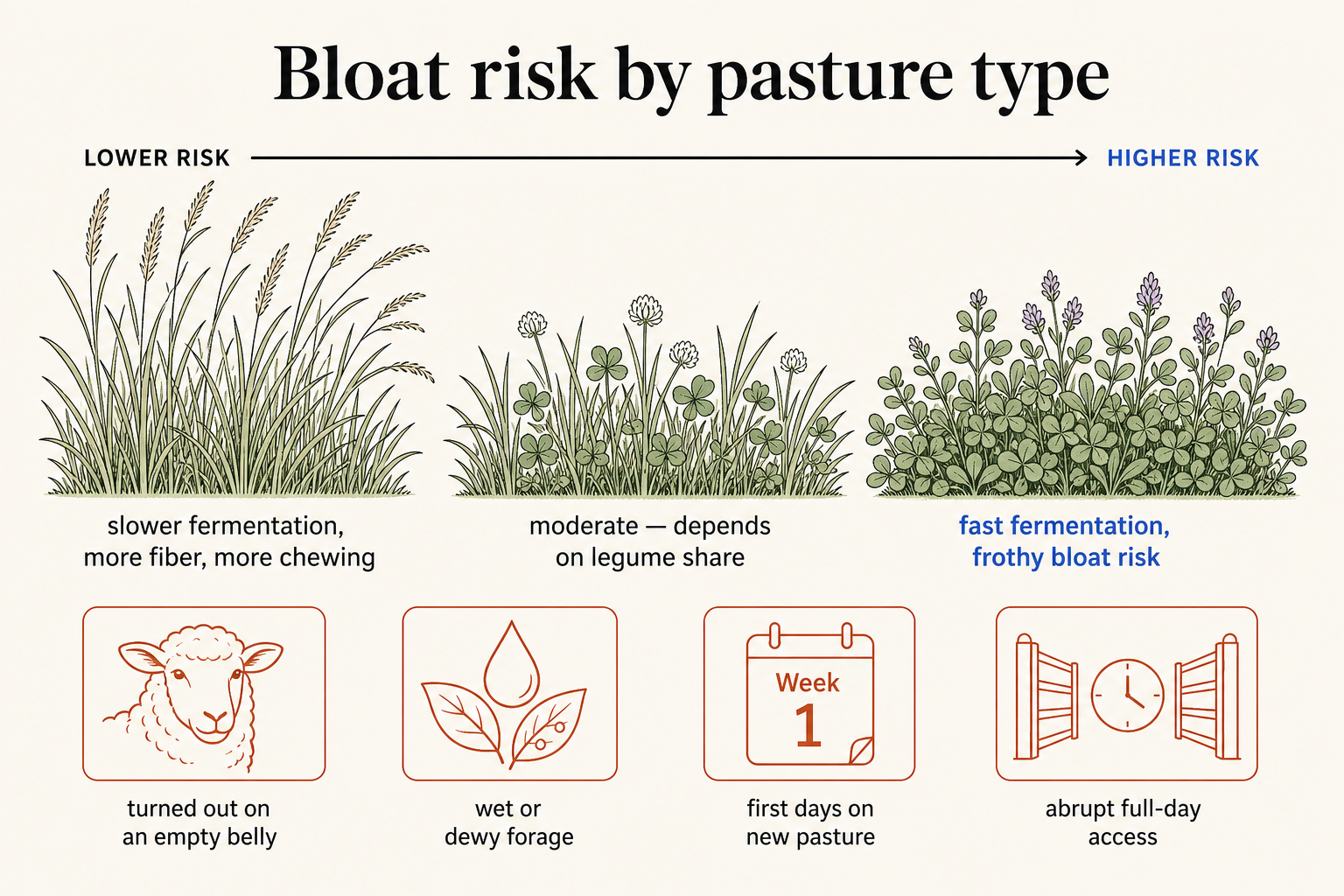
On lush legumes, forage quality and bloat risk ride together. The prettiest field you own can be the most dangerous one in week one.
That's the mental shift. The question isn't "is this good pasture?" — it usually is. The question is how fast a rumen that's been living on dry hay can adapt to it.
Read the Field Before You Open the Gate
Walk the pasture before turnout, on your hands and knees if you have to. Grab handfuls of what's actually growing at grazing height, not what you hope is growing.
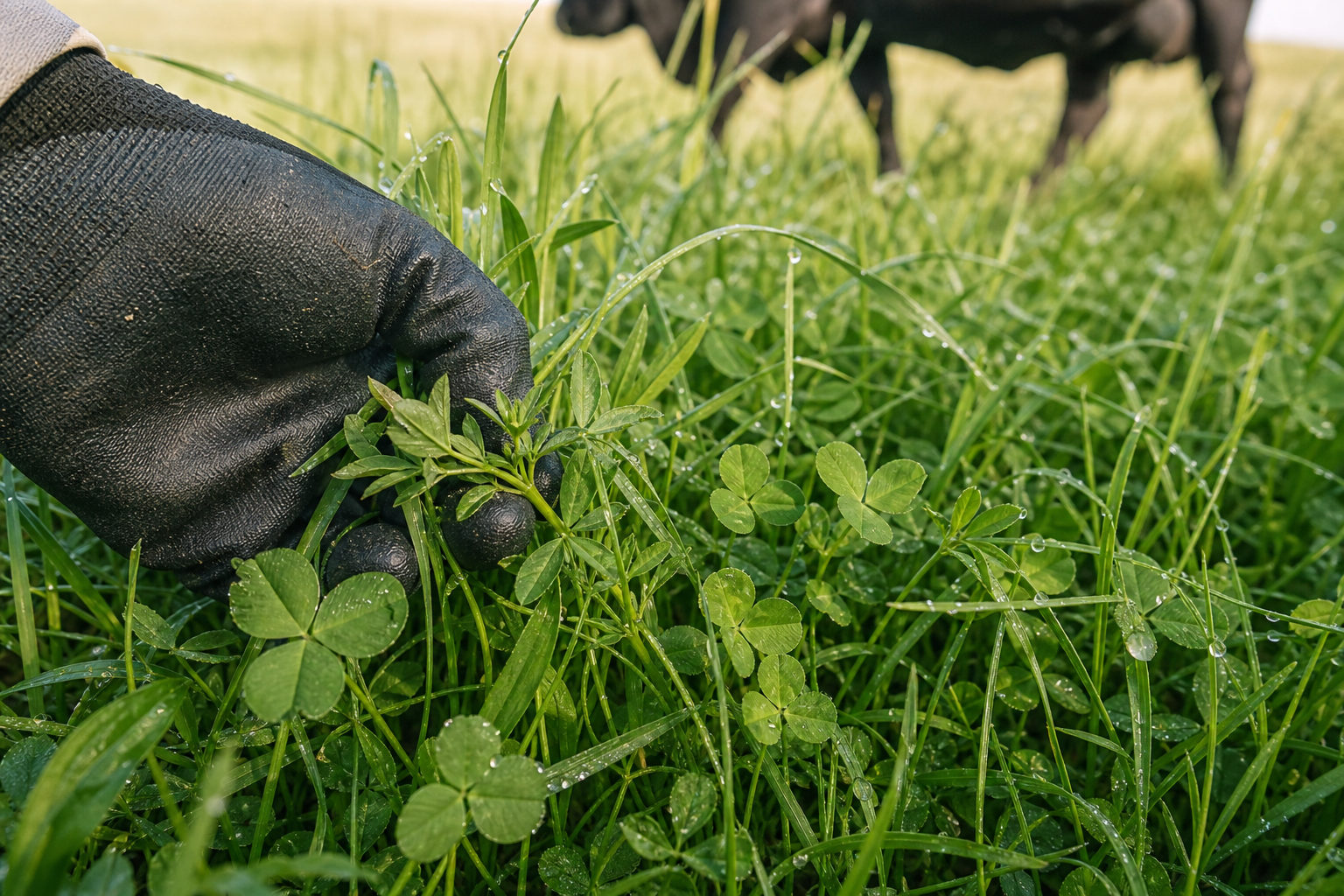
Here's what you're sorting out:
- Legume share. Estimate the actual percentage of clover or alfalfa at grazing height. Legume-dominant stands carry the highest risk. Grass in the stand lowers — but does not eliminate — that risk, and sheep may selectively graze the legumes first.
- Growth stage. Young, vegetative, fast-growing forage ferments faster than mature growth of the same species. First lush spring flush is the classic setup.
- Wetness. Dewy, rain-soaked, or freshly irrigated forage goes down faster and is widely regarded as riskier. Plan first sessions for after the field dries.
- What the sheep have been eating. Sheep accustomed to dry hay and grain are not adapted to the moisture, intake pattern, and rapid fermentation of lush pasture. Introduce it gradually, but remember that adaptation reduces digestive disruption without making bloat-prone legumes safe.
Tall, mature, mostly-grass pasture? Standard caution, normal transition. Thick, lush clover or alfalfa? That's prime bloat country, and the plan below stops being a suggestion.
A Gradual Turnout Plan
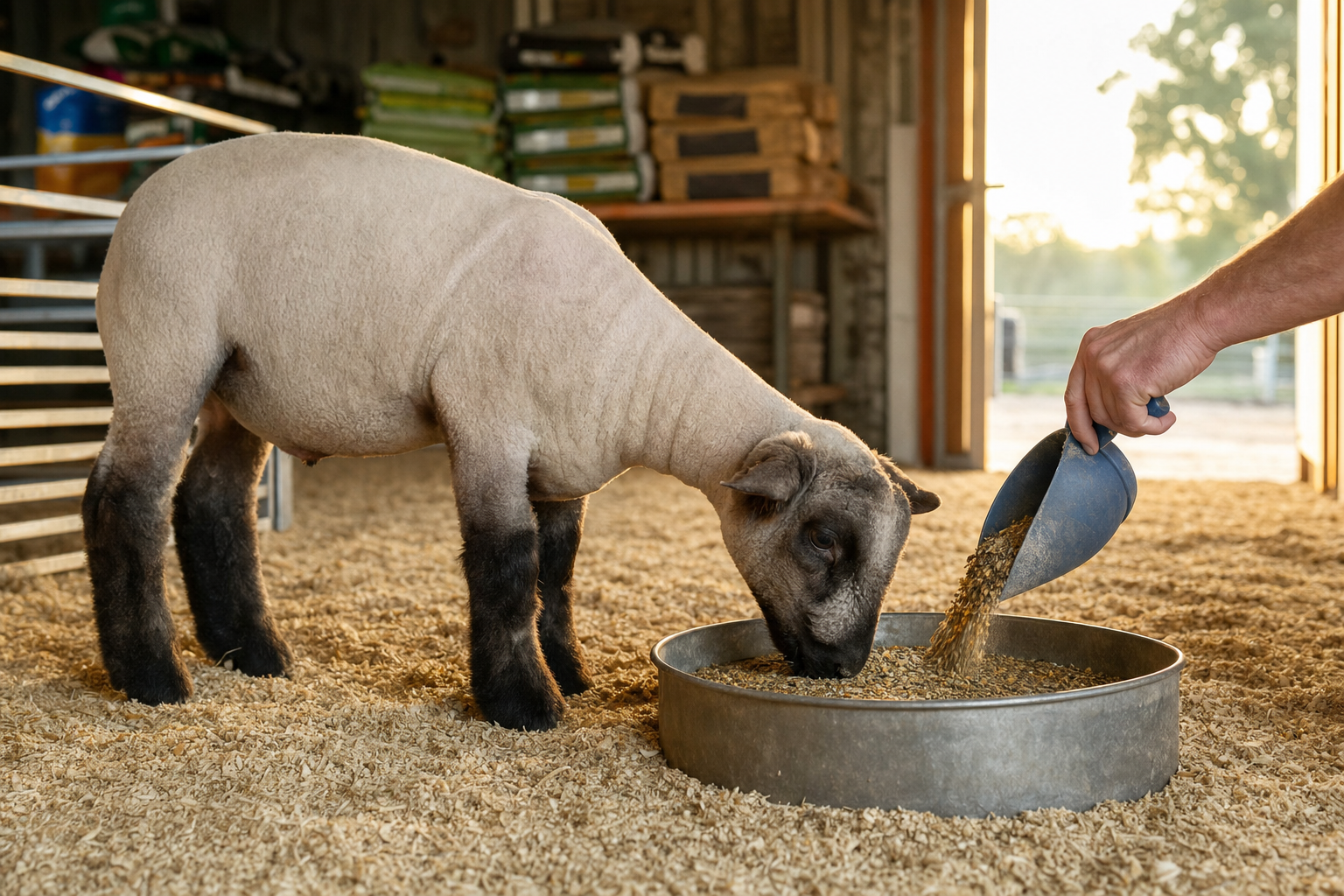
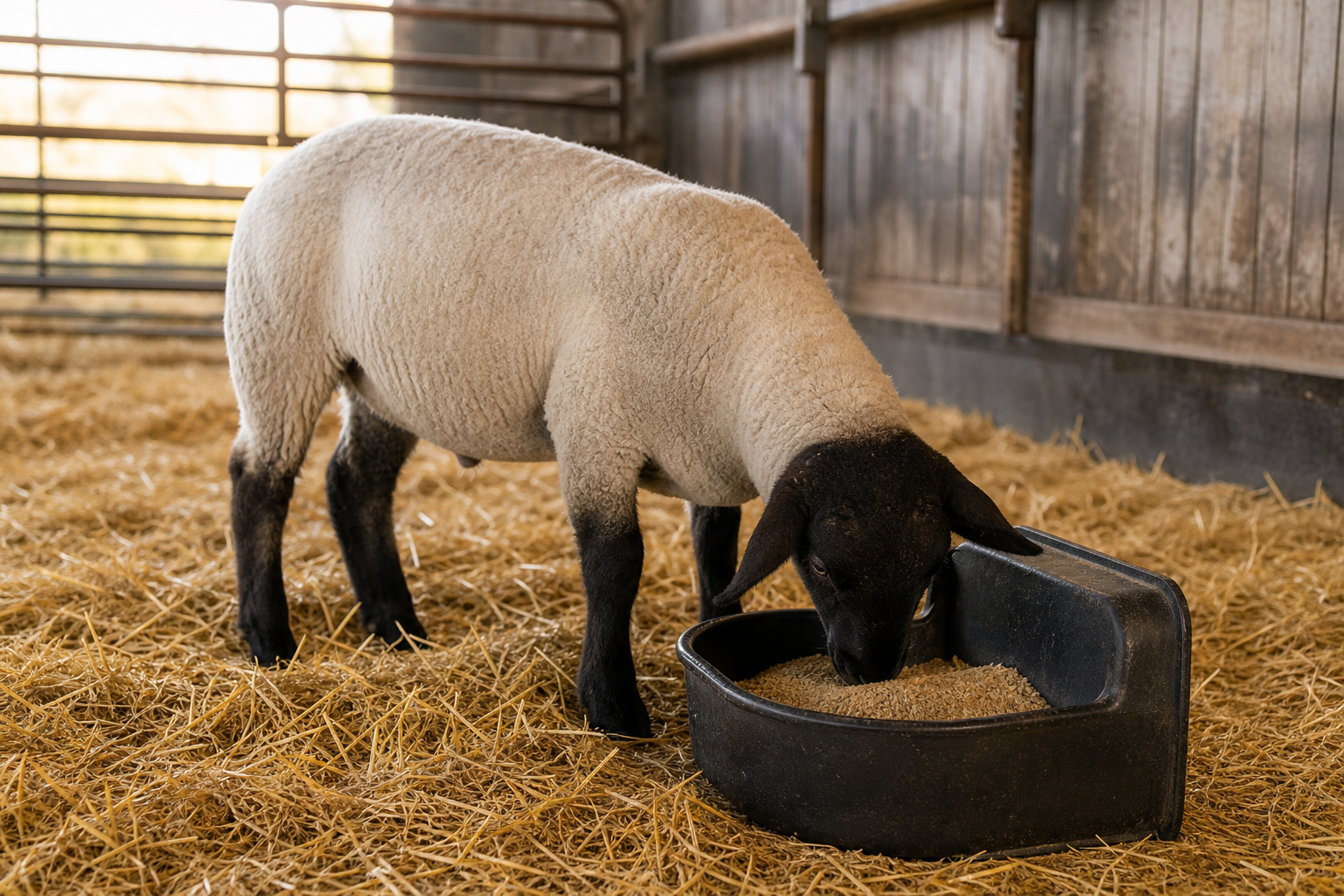
The most common turnout mistake isn't the pasture — it's the timing. Don't cut feed hard the same day the sheep hit grass, and never turn them out hungry. Abrupt ration changes are what cause most nutrition wrecks in lambs, from scours to acidosis (sdstate.edu). The ration stays steady while the forage changes. Then, once they're settled, condition — not the calendar — decides whether the grain backs off.
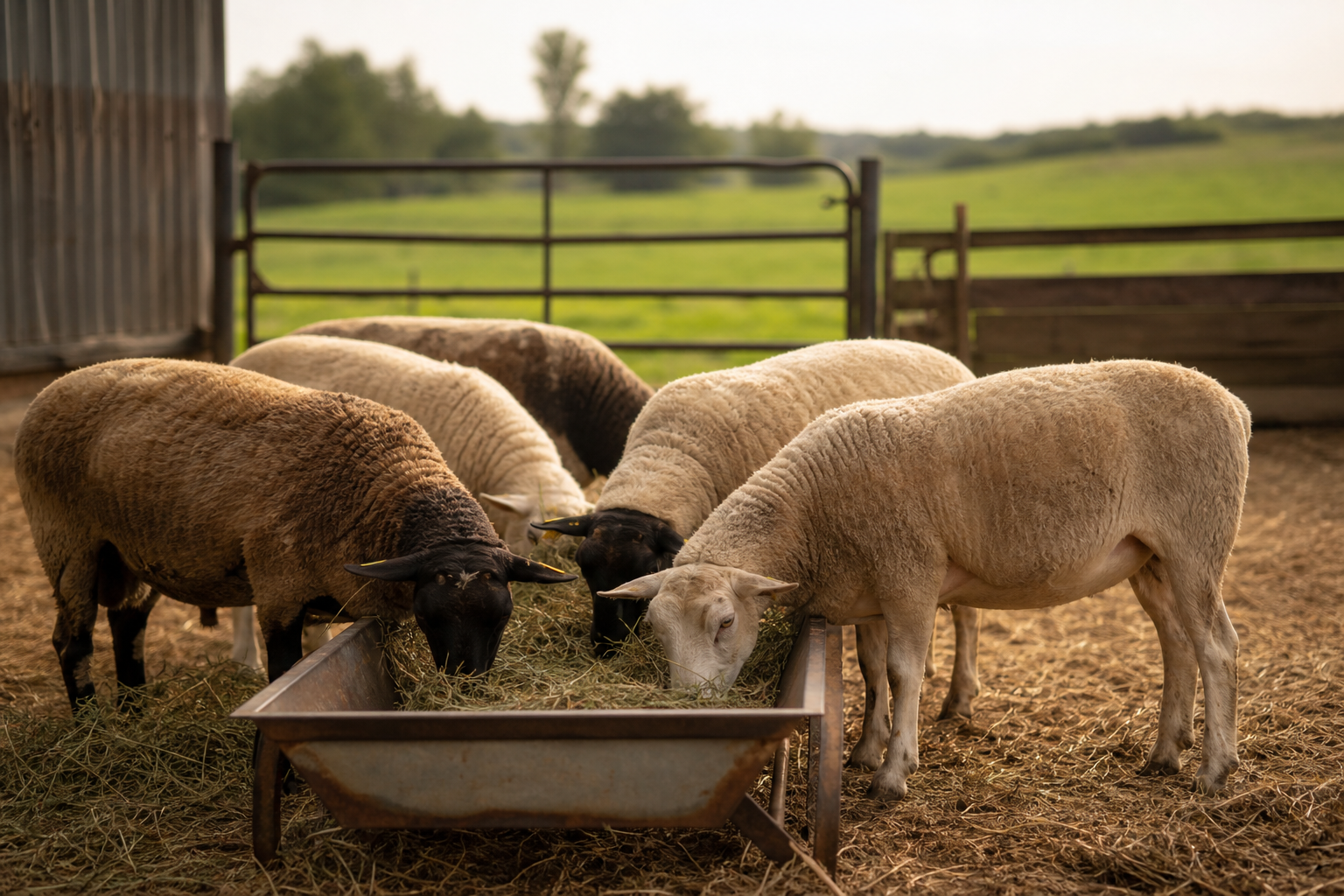
One honest caveat: management lowers risk, it doesn't erase it. Lush alfalfa is never "safe" — it's managed. Individual sheep can still bloat on day ten after nine perfect days, which is why the next section matters more than this one.
Bloat Signs You Can't Afford to Miss
For the first week especially, put eyes on them several times a day — and know what you're looking at. A full rumen after grazing is normal: the left side is rounded but the sheep is bright, chewing, comfortable. Bloat is different.
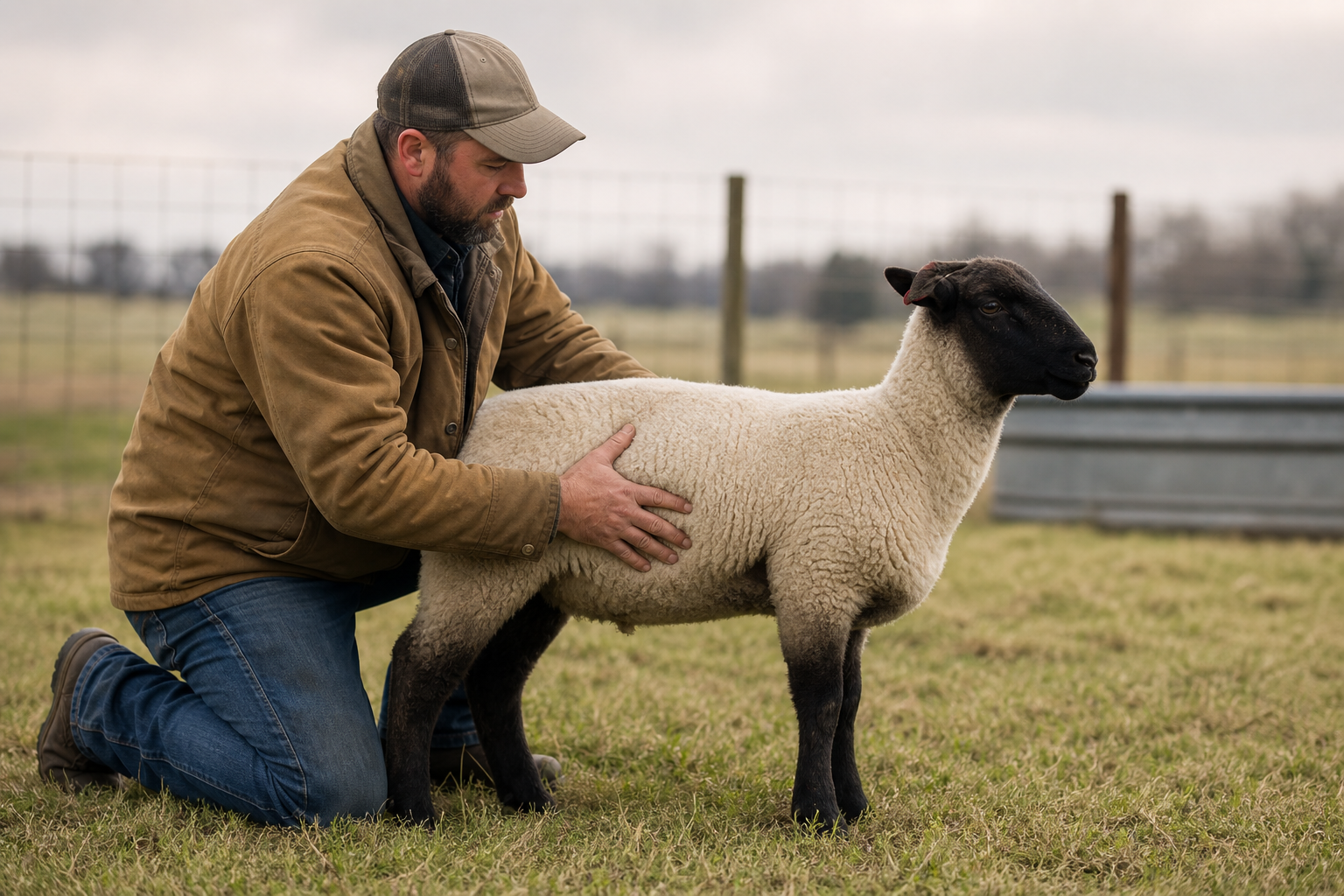
- A hard, high, swollen left flank — drum-tight, not soft and doughy. The rumen sits on the left; that's where you'll see it first.
- Off feed or not chewing cud in an animal that should be.
- Restlessness — repeated getting up and down, standing stretched or wide, grunting.
- Labored breathing, drooling, or staggering — the inflated rumen is pressing on the lungs. This is late-stage.
Any of those, get them off the pasture without delaying the call. Suspected bloat warrants an immediate call to the veterinarian. Labored breathing, staggering, collapse, or a rapidly enlarging tight left flank is a minutes-matter emergency. Do not rely on walking, tubing alone, supplements, or improvised puncture.
Water and Mineral: The Quiet Support System
None of this is glamorous, but it's the infrastructure the whole transition runs on.
Fresh water, always. Water intake drives rumen function, keeps motility steady, and underpins appetite. Sheep on lush forage get moisture from the grass, but that doesn't excuse an empty trough. Check it daily; scrub it when it needs it.
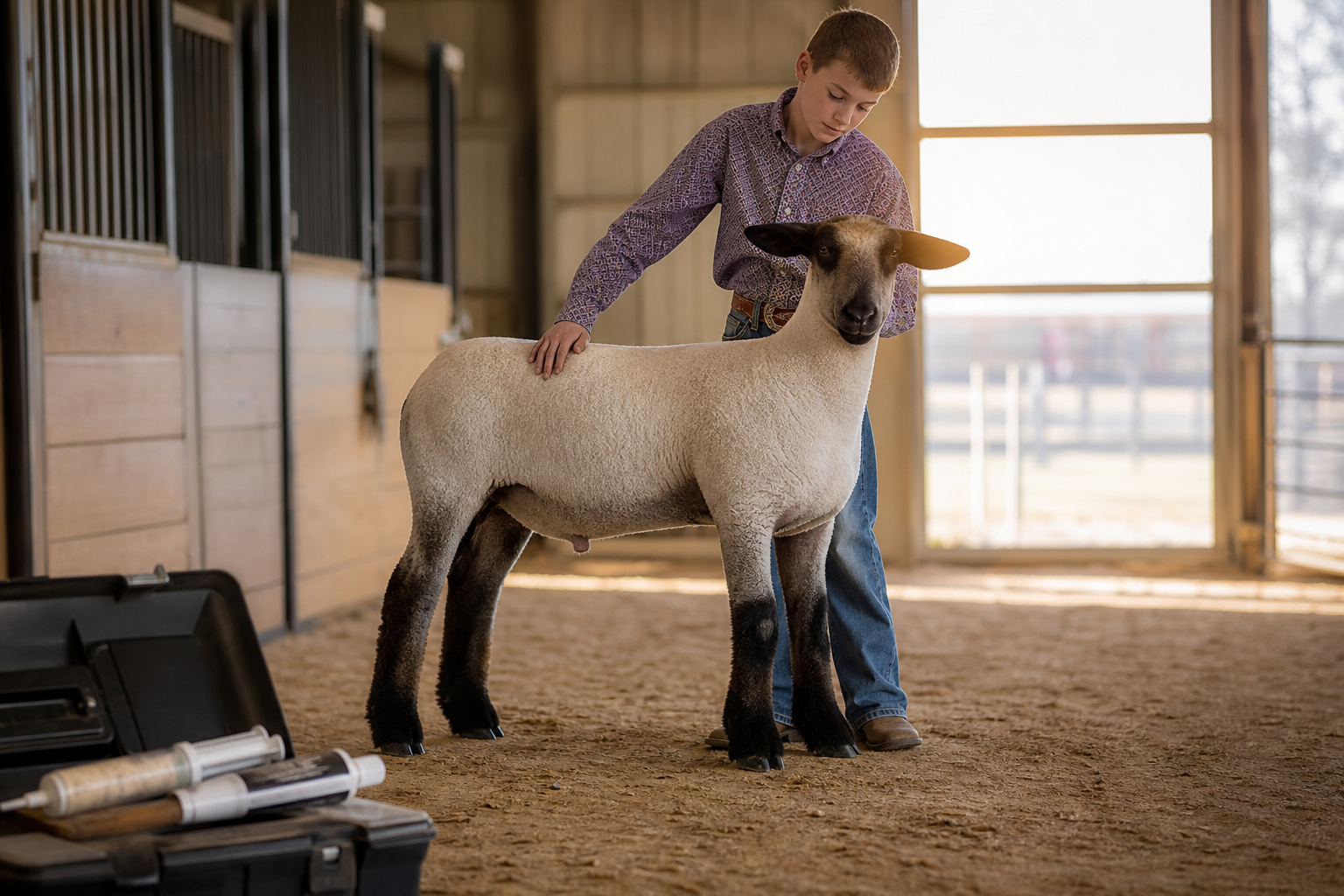
A sheep-specific loose mineral, fed according to its label. Pasture covers a lot, but not everything, and a consistent mineral program keeps the bases covered while the diet shifts underneath them. Something like Ante Up Show Lamb Mineral is a daily base mineral. Feed a sheep-labeled mineral according to the current package label, including its stated amount and whether it is intended for hand-feeding or free-choice use. Keep the feeder dry and monitor intake.
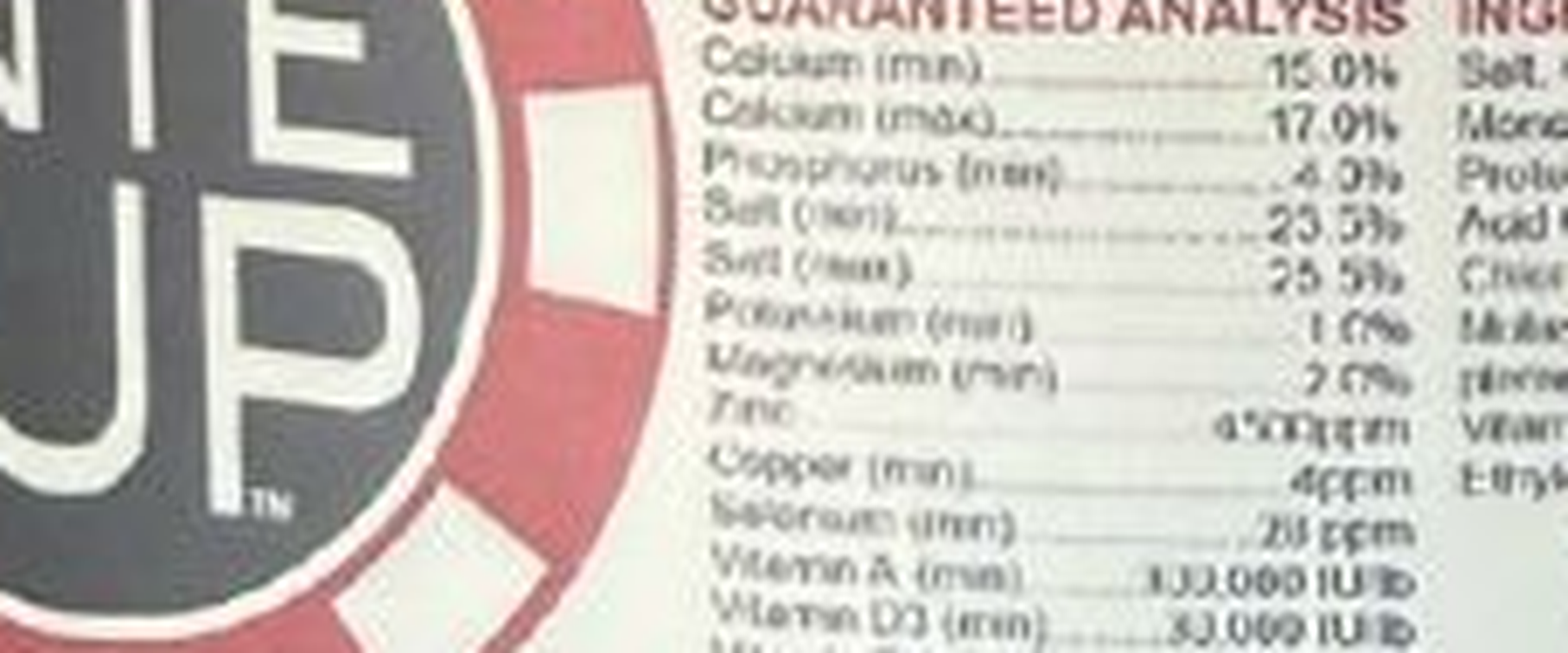
And keep the roles straight: hay before turnout can reduce hungry gorging. Fresh water and sheep-specific mineral support normal nutrition but do not prevent or treat bloat. If a medicated bloat preventive is appropriate, use it under your veterinarian's direction and follow the exact product label.
- The forage sets the risk: tall mature grass is forgiving, while lush clover and alfalfa demand stand-specific management.
- Never turn out hungry or change everything on the same day. Increase pasture access only as the stand, grazing behavior, manure, and flock response justify it.
- Suspected bloat warrants an immediate veterinarian call; labored breathing, staggering, collapse, or a rapidly enlarging tight left flank is a minutes-matter emergency.
- Fresh water and sheep-specific mineral support normal nutrition but do not prevent bloat — cattle, goat, or horse mineral can kill a sheep.