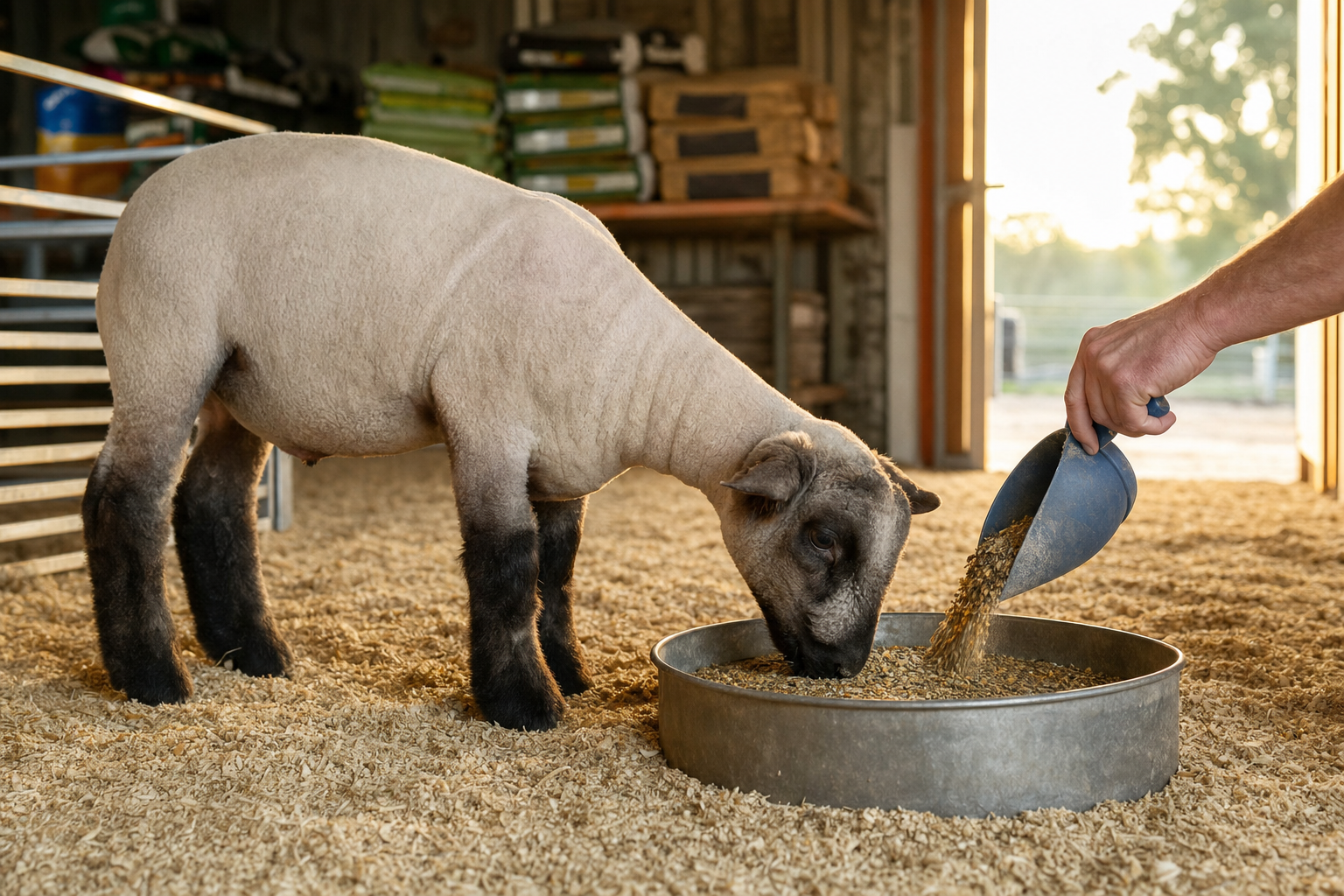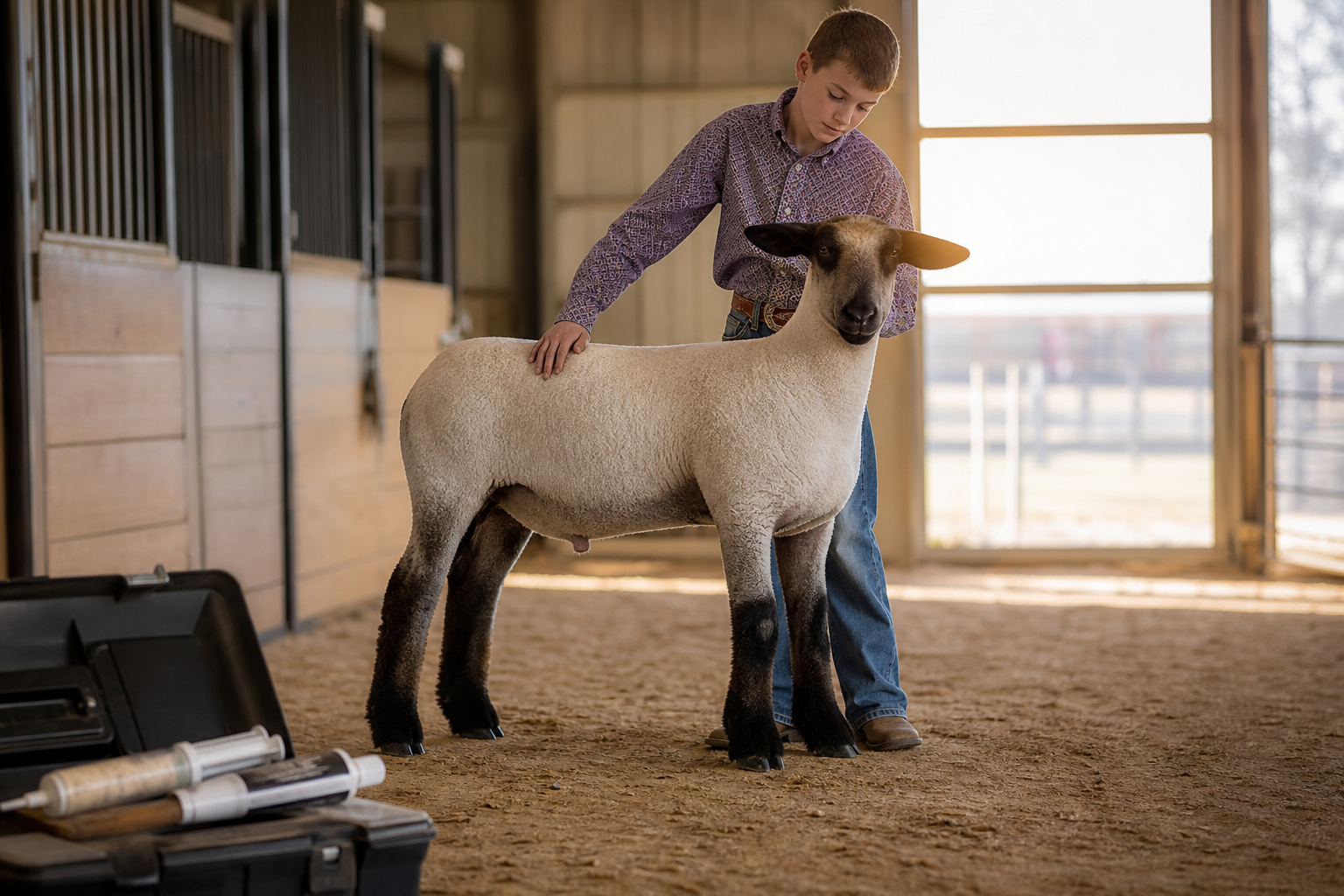
If you run show lambs on rotationally grazed paddocks, the mineral feeder is the one piece of equipment that has to work correctly in every single cell of your system. The paddocks change. The forage changes. The lambs' movement pattern changes. But the mineral has to stay dry, findable, and consistently available through all of it — and where you physically set that feeder has more to do with whether that happens than most families realize. Good placement is a management decision, not an afterthought, and it's one of the cheapest performance levers in the whole program.
Why placement matters more in a rotation
In a drylot, lambs learn one map: bunk here, water there, mineral in the corner. In a rotation, that map gets redrawn every few days. If the mineral feeder doesn't move with the flock — or gets set in a spot the lambs don't naturally travel — intake quietly drops off. Not because the lambs don't "need" it, but because access failed.
That's the first principle worth internalizing: mineral consumption is heavily driven by salt, habit, and location, and it varies animal to animal and week to week. Some individuals in any flock simply won't consume free-choice mineral consistently, and intake varies widely animal to animal extension.sdstate.edu. So when consumption shifts after a paddock move, the smart first question is "what changed in their environment?" — not "what deficiency are they telling me about?" A lamb hammering the mineral after a move might be reacting to new forage, new water salinity, weather, or simple novelty. Intake is information about behavior. It is not a diagnosis.
The placement rules that actually hold up
A few placement decisions cover most of what goes right or wrong in a rotational setup:
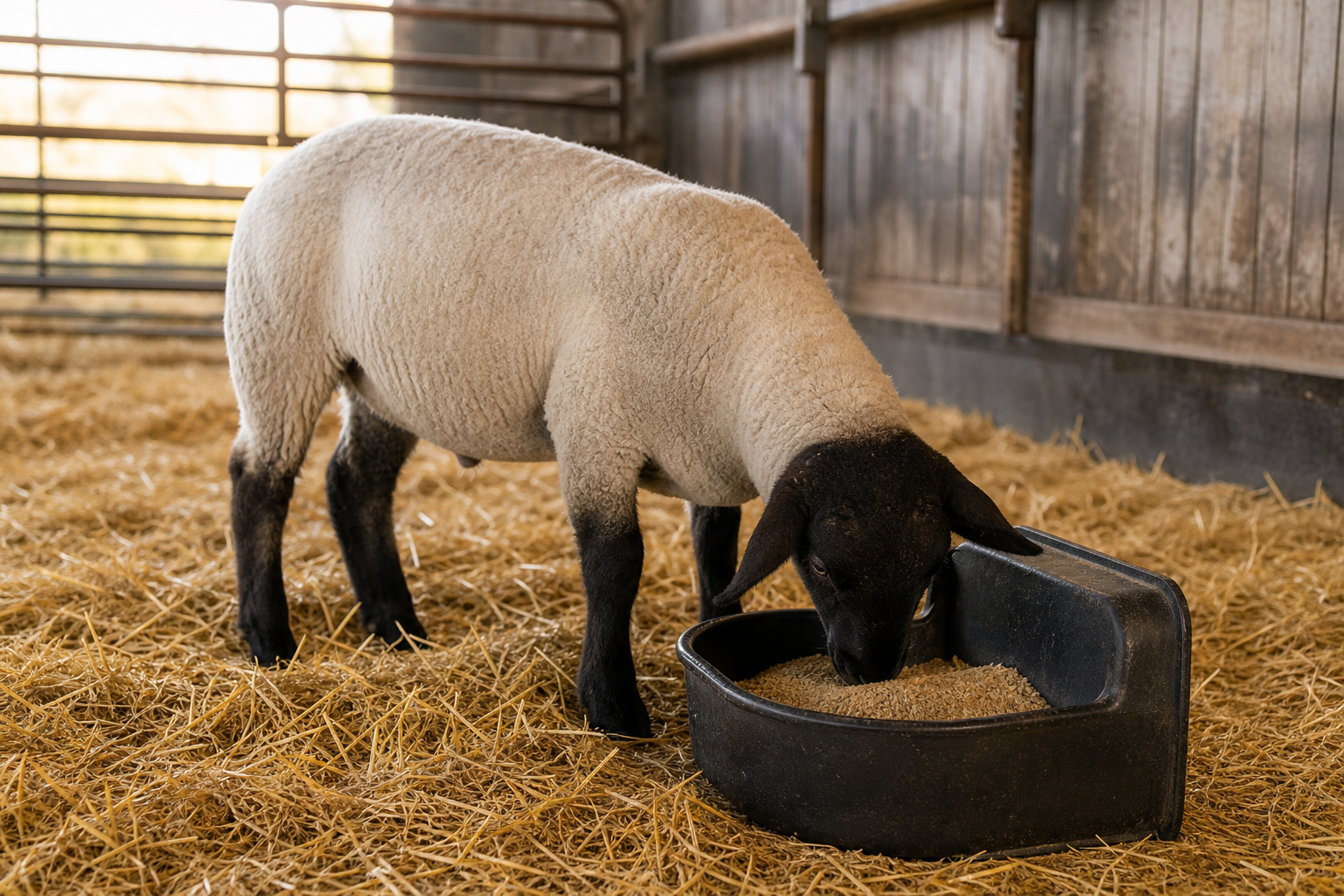
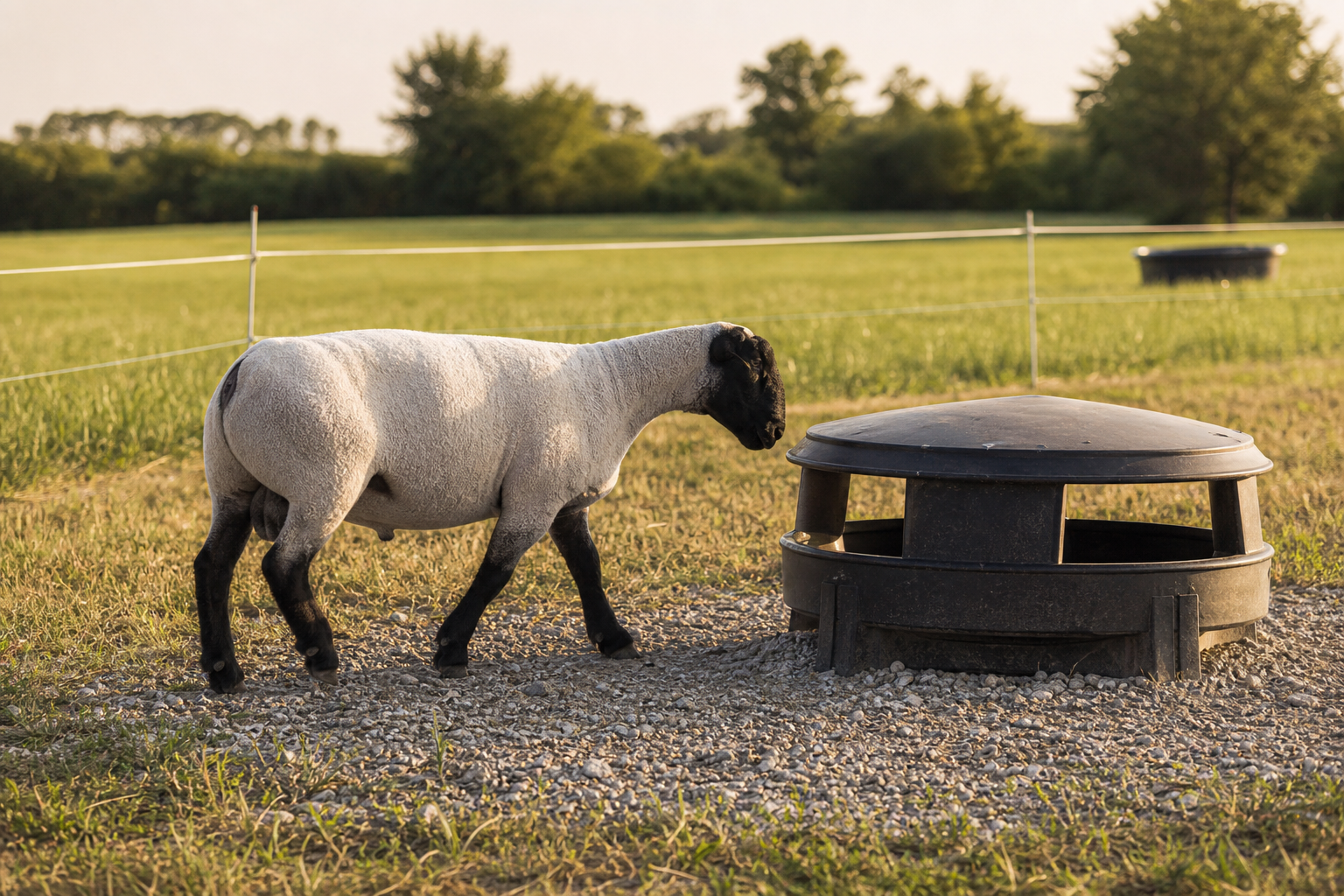
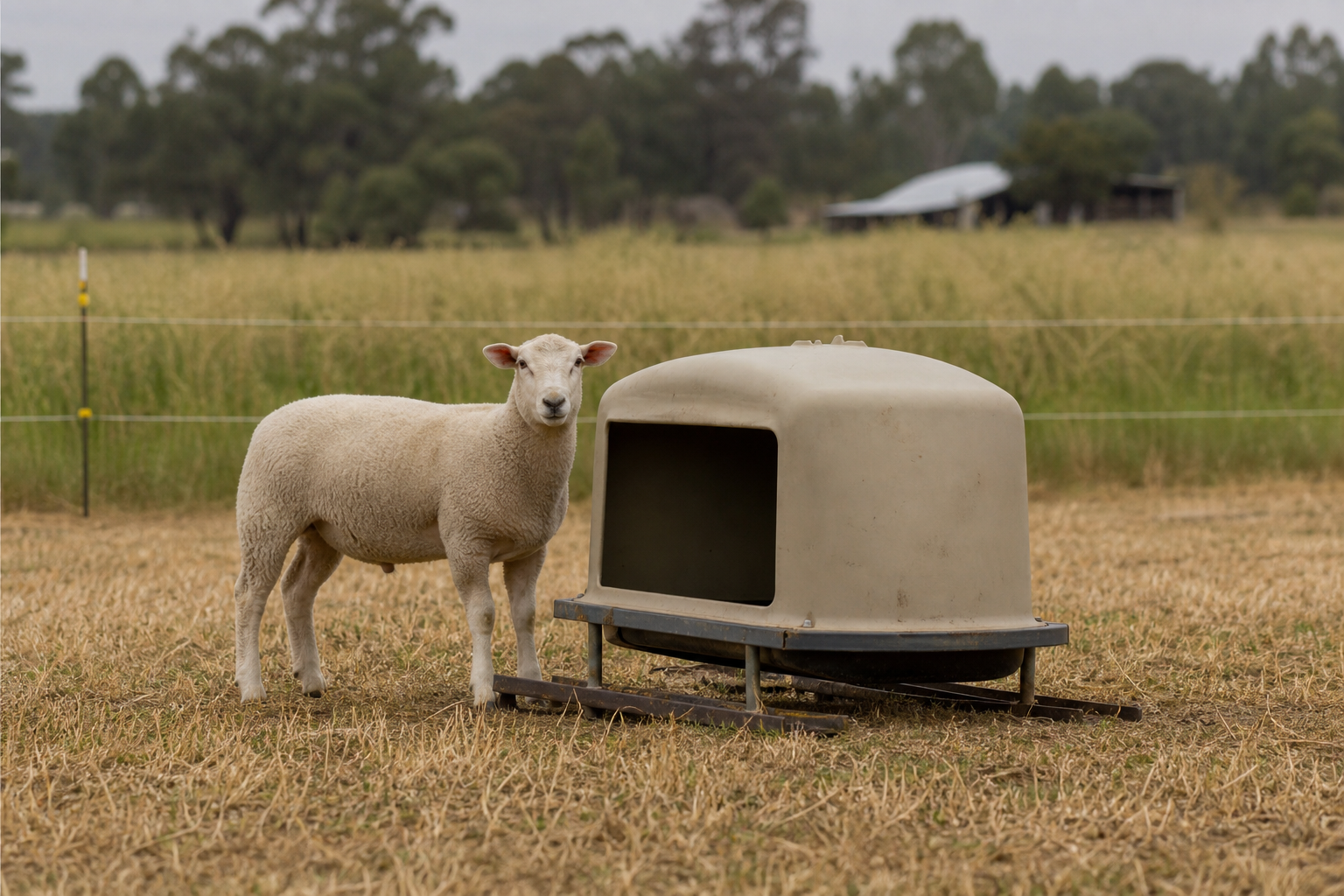
Covered, dry, and off the ground — every paddock. Loose mineral that gets rained on cakes into expensive concrete, and once it cakes, consumption craters. A covered feeder also keeps out manure and contamination. Sheep-specific guidance consistently recommends covered feeders in a dry, accessible area, checked frequently sheepandgoat.com. In a rotation, "checked frequently" means every move, not every week.
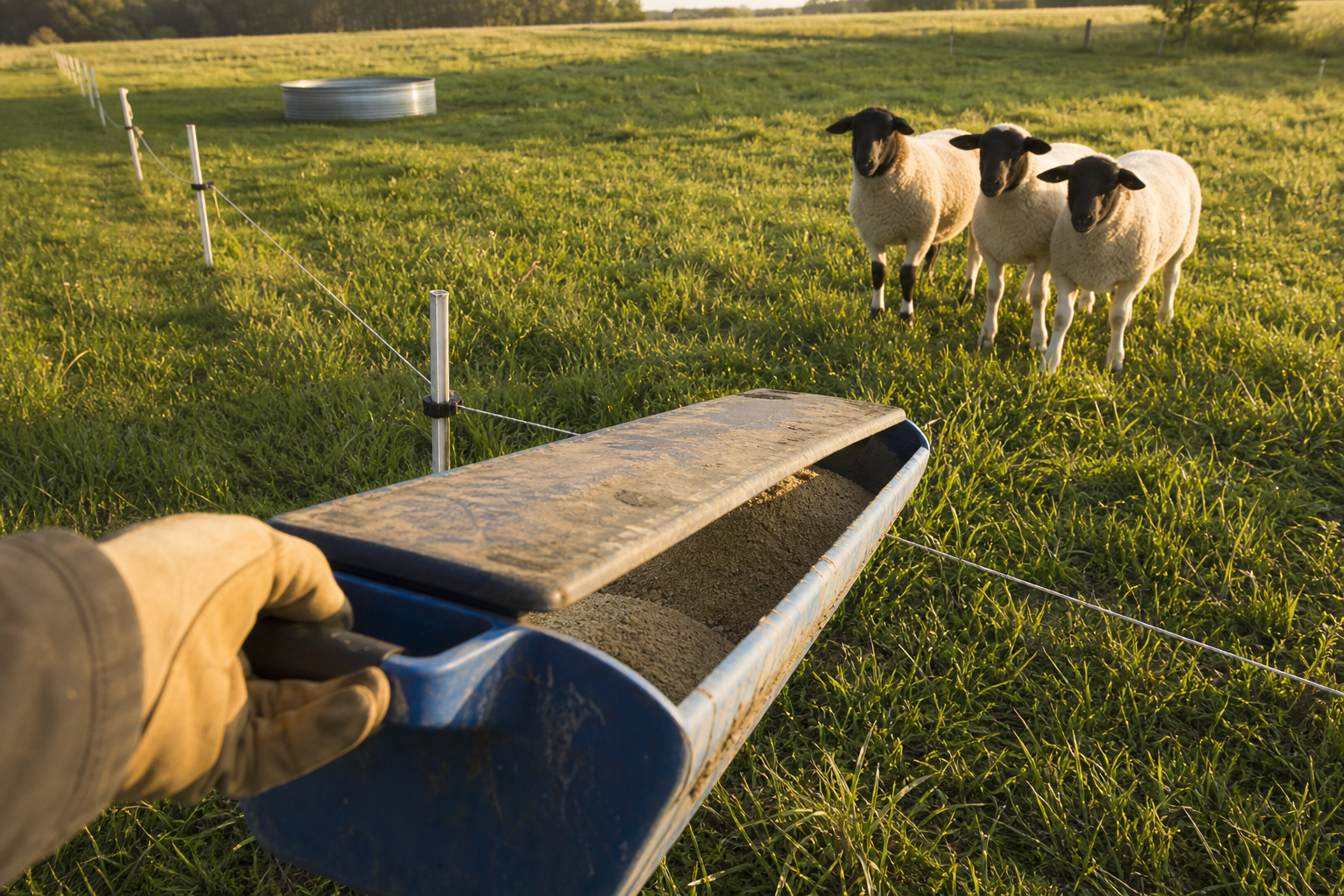
Move it when the flock moves. The feeder is part of the rotation. If it stays behind in the old paddock, you've effectively pulled mineral out of the program for however many days it takes you to notice.
Put it where they'll find it — but not on top of the water. Near water or along high-traffic lanes is the classic recommendation, and for good reason: lambs pass through those zones constantly. But "near" and "right beside" are different things. Parking the mineral two feet from the trough concentrates traffic, manure, mud, and crowding in the one spot every lamb must visit daily. Set the feeder on a lane or a high point a short walk away — close enough that discovery is automatic, far enough that the water area doesn't become a congested, mucky choke point. Making them travel a little also spreads grazing pressure instead of camping the flock around one corner of the paddock.
Use placement as a grazing tool. This is the underrated part. Lambs build daily routes around the resources they visit: water, shade, mineral. Where those resources sit influences where lambs spend time and which forage gets grazed hard. Rotating the feeder to underused corners of a paddock nudges the flock into forage they'd otherwise walk past. It won't replace good paddock design, but it's a real, free adjustment.
Intake tells you how your lambs are behaving. It does not tell you what they're deficient in.
Placement protects consistent access — and the daily base
The reason consistency matters is what the mineral is doing in a show program. The daily base mineral covers the calcium, phosphorus, salt, and trace-mineral foundation under everything else — the ration, the topdresses, the work. If access is sporadic because the feeder got left in the last paddock or turned to brick in a rainstorm, that foundation has holes in it, and no supplement fed at the bunk patches it retroactively.
For show lambs specifically, a sheep-specific loose mineral fed at the bag rate is the right frame. Something like Ante Up Show Lamb Mineral is built for exactly this role — its label calls for 0.5 to 1 oz per head per day, a label rate range you can track actual disappearance against. Pick the rate appropriate for your lambs according to the label. Follow the bag rate, not somebody's Facebook recipe.
Don't stack sources without reading every tag
Rotation setups tend to accumulate mineral sources: the loose mineral in the paddock, a tub at the water, a fortified topdress at the bunk, maybe a show feed that already carries a trace pack. Each one looks modest alone. Together, selenium and trace minerals add up fast — and the line between adequate and excessive in sheep is genuinely narrow, in both directions extension.sdstate.edu. More mineral is not better; it's just more. Before anything new goes out, read every tag in the program and know what the total picture looks like.
Track bag use like a scorecard, not a symptom
Here's the practical habit that ties placement to management: know your math. If the label says 1 oz per head per day and you're running four lambs, you should expect about 120 oz to disappear over 30 days. If that amount disappears in three weeks, or sits untouched for two months, something changed. Maybe the new paddock's forage shifted intake. Maybe the feeder flooded. Maybe the lambs can't find it after the move. Placement problems and consumption problems look identical on a scorecard, and tracking bag use is how you catch either one early. What it doesn't tell you is that the lambs "need more" or "need less" nutritionally — sudden changes are a prompt to go look, not to reformulate.
- Move the mineral with every paddock rotation — a feeder left behind is mineral out of the program.
- Keep it covered, dry, and off the ground; wet loose mineral cakes into concrete and intake craters.
- Place it on a travel lane near water, not on top of it — spread traffic, avoid congestion, and use location to pull lambs into undergrazed corners.
- Track bag use against the label rate; a sudden swing means go check what changed, not assume a deficiency.